Tapping into Your Authenticity

This blog started to assist me in my recovery from my eating disorder. It’s hard to believe it’s been 4 years since I took in interest in healing myself. So much of who I am today is thanks to this healing. Recovery is no longer recovery – it’s continuous, never-ending discovery, and for that reason I feel no resentment towards my previous and occasional present struggle with food. The first year of recovery was focused on becoming comfortable around food again and eating enough to sustain myself. This phase is crucial for everyone with an eating disorder because it keeps you alive. But the years that have followed have been equally as crucial to my overall well-being in my opinion. Eating habits and poor body image are just forms of “protection” to keep you from tapping into the suffering or insecurity lying beneath something much deeper than the body. When we can recognize we are acting out of a compassionate place of protection, we begin to understand our behaviors and their intentions. A few months ago I had what felt like a break-through therapy session. I was struggling with my body image and weighing myself daily to assure myself my thoughts were just fears and not truths. Each day the scale confirmed I was not gaining weight, and each day I felt a deep discomfort in my skin. I felt insecurity in such an intense way because I was facing it head on ad realizing these coping mechanisms that I thought served me, weren’t even effective. I spoke to my therapist and admitted the scale had been worked back into my daily routine. I told her I knew this wasn’t even about a fear of weight gain anymore because the number confirmed that wasn’t the case and yet I was so scared. She confirmed my belief that my struggles weren’t about weight, they never were, but they were stemming from something so it was time to dissect these thoughts a little more.

I have also said I fear gaining weight because I’m nervous people would notice a difference in my appearance. So what? – you might be thinking. Well, get ready because here is where my self discovery really comes to life. My thought process unconsciously has been convincing me : If people notice my weight gain they’ll think differently of me, they’ll see me as lazy or unmotivated, or worse of all – unattractive. If I’m seen as unattractive I will no longer be desired. I will lose relationships, I will lose friendships, I’ll lose opportunities – I won’t be successful. This is the weight I carry when I step on the scale, it isn’t about calories, it isn’t about my daily step count, or the grams of sugar I consumed in 24 hours, it’s about feeling a rather intense shame that I never knew how to feel.

Fast forward to current day. I just began my job as I’m currently training in an Aldi Store as a store manager. Everyday new information is thrown at me. Everyone around me knows more about the job than I do. They also all know each other better than they know me. The job is physically demanding and most employees are stronger than me. I know I have been giving each day my all, but I also know I am making mistakes everyday. During my first few weeks I felt myself slip into the shame. I revisited that conversation with my therapist. I tried to make sense of my emotions. Even though I thought the emotions were subtle, my discomfort in my body told me otherwise. As I searched for some logic in the midst of my struggles I came across a podcast that truly put all the pieces together for me. The podcast host talked about 3 tendencies that typically lead to eating disorders and/or unhealthy lifestyle habits . The 3 tendencies are:

  1. Perfectionism
  2. People Pleasing
  3. Negative self-talk

I relate to each tendency in such a powerful way. I have also strived for perfection – whether it’s my work, school, relationships, social settings, physical appearance, I have always aimed to be the best. I never achieved this in high school (probably because it’s impossible to) and I think I have since lived with a little bit of that scar. There were plenty of times in High school I felt undesirable, to a degree I have not come close to experiencing since. I think somewhere along the way I put up this shield to ensure I didn’t feel that way again. That shield was a drive towards perfection and that drive was defeated by my eating disordered. Next is my tendency to people please. Hopefully if you know me well you know me as an empathetic person. I’d like to think that’s one of my greatest qualities. My desire to please comes from a very sincere place. I envision myself experiencing the emotions of others and I do everything possible to try to make those emotions pleasant for people. The problem arises when I lose myself trying to please everyone around me. This is what I think I have found to be the most eye-opening discovery since beginning work. I had been feeling shame for not pleasing my coworkers to the extent I wanted to. The quality of my work was mostly out of my control having not been trained in many fields yet and that led others to have to compensate for my shortcomings. Unsurprisingly this is where the negative self talk comes into play. Once these shameful feelings arise negative self-talk is there to convince you all these critical thoughts you have of yourself are true. The worst part is the negative self-talk will also convince you other people are judging you in the same way you are judging yourself. This can ADD UP. Can you begin to see how much we unconsciously juggle each day??

Listen, this isn’t a sad ending. Yes these tendencies can be a burden, but they’re also associated with some really incredible traits. As I said, I have my empathy to thank for my desire to please people, I have my success to thank for my drive towards perfection, and I have self compassion to practice to keep me from believing everything negative thought I hear.

The body is listening when you forget to listen to yourself. 4 years later and I can confidently say while I don’t always have explanations for what I am feeling, I have the wisdom from my body to let me know when I am in need of healing. It starts somewhere deeper. Everyone’s body struggles are coming from something more meaningful than a desire to change your weight or appearance. So if you are struggling with body image issues, I really encourage you to take that risk and explore what’s beneath it all? The discovery may be painful, but unlike your eating disorder habits it’ll ultimate be worth it. Tap in – it’s the bravest thing you can do.

Regulating Emotions Through Yoga

See Yoga Sequence in link below:

Yoga Sequence for Class

Unknown-2.jpegIn light of Lisa Barrett’s How Emotions Are Made, I have chosen to elaborate upon chapter 9 “Mastering Your Emotions,” by exploring the emotional implications of the practice of yoga. Barrett suggests people practice yoga due to its many benefits to both the body and mind. Since I am curious in learning more about how the physical body can relate to one’s mental activity I will seek to explain how Barrett’s beliefs about body budgeting tie into the practice of yoga. In order to better understand how yoga regulates one’s emotions, as Lisa Barrett claims it does, I interview a professional yoga therapist, Ann Saffi Biasetti, who specializes in the field of eating disorders.  I follow up my conversation with Dr. Biasetti by

Unknown-3.jpegwriting a brief reflection paper highlighting some of the main points of our conversation and tying them back into the work of Lisa Barrett. I conclude the project by compiling a series of yoga poses. With each pose I provide a detailed description of how to do the pose as well as a brief paragraph explaining how the pose may help regulate one’s emotions. My hopes in exploring such a topic is people will begin to better understand the unity between the body in mind and will be more aware of how their physical movements may impact their mental states. Being someone who practices yoga regularly, I myself am interested in learning more as to why this practice has felt so transformational in both my body and mind.

To introduce you to my project I want to begin by introducing you to the brilliant work of philosopher Lisa Barrett. Barrett, author of How Emotions Are Made. Barrett demonstrates her extensive knowledge of the body and mind throughout her book which explores the nature of emotions. In chapter 9, “Mastering Your Emotions”, Barrett offers the reader suggestions for helping regulate emotions. Barrett lists out several activities for people to participate in, in order to calm or sooth intense emotions. Before diving into these therapeutic activities, let’s better understand how emotions come to manifest themselves in a person and therefore a person’s body. 

Unknown-1.jpeg

Barrett’s introduces the term “body budgeting” in chapter 9. Essentially, one’s body budget is regulated by his/her predictive circuitry in the interceptive network. This is a scientific way of saying your mind predicts what it is your body needs. When these predictions come out of sync with your body’s actual needs, we in our human bodies begin to experience unpleasant sensations. In order to prevent misprediction from occurring the predictive circuitry must respond to the counterevidence from the body. If we continuously ignore counterevidence from the body, we will eventually lose this form of communication from the body and begin to feel miserable. Let me give you an example to clarify: We all know we need to eat when we are hungry, but say you are distracted or not near food at the time, or worse say you choose not to eat despite acknowledging your hunger. In these scenarios we are not giving the body what it needs. The body knows this and responds with counterevidence. We may begin to hear our stomach grumble, we may become irritated, etc. But what happens when we ignore this counterevidence from the body? When hunger cues from the body are continuously ignored, the body stops sending them knowing these cues are going unnoticed. People struggling with anorexia often say they do not feel hungry. These individuals are not lying; they likely aren’t feeling hungry because their body no longer finds purpose in sending hunger messages to the brain. However this does not mean that individual’s body is satisfied, in fact people suffering from eating disorders are far from achieving physical satiety. Maybe his/her stomach doesn’t growl anymore, but their energy levels are lower than ever, their hair is slowly falling out, their body has stopped menstruating, the body is screaming for help. This example explains Barrett’s quote on page 177 where she says “Once the predictions have been off based for long enough you begin to feel miserable.”

Given the restricted flow of nutrients coming into the body, the interceptive network lacks the energy needed to issue healthy predictions. According to Barrett this repetitive failure to send accurate predictions to the interceptive network, leads the body to become out of balance. It is unsurprising that we begin to see the flawed predictive process effecting our feelings at this time. Individuals who suffer from eating disorders are said to have lower emotional granularity levels than those who do not, according to Barrett. One’s emotional granularity is dependent upon their ability to “issue predictions and construct instances of emotions that are finely tailored to fit each specific situation” (Barrett, P.180). Someone with high emotional granularity may be said to be an emotional expert given their ability to construct fine-grained emotional experiences. On the flip side, people with low emotional granularity such as individuals suffering from eating disorders tend to broadly categorize emotions as they have not yet developed emotion concepts. Let me provide an example of this phenomenon to simplify the language. Back to the example of someone suffering from anorexia. This person may broadly categorize the emotion of anxiety. Without a clear understanding for the emotion’s existence, the person displaces the emotion away from the situation and into the body. Anxiety in the body may begin to appear in the form of restrictive eating, over exercise, etc. Knowing the emotion of anxiety is unpleasant, but not understanding its’ origins, will lead to fluctuations in the body budget. As the individual continues to mispredict the cause of the anxiety relating it to their appearance or weight, they expand their opportunity to ruminate. This cycle leads people to dwell and obsess over the unpleasant experiences of the disorder.

Unknown.jpeg

It is during these moments that instances of suffering arise. Barrett distinguishes the difference between suffering and discomfort saying “discomfort is physical, suffering is personal” (Barrett, p.180) In light of such unpleasant interceptive sensations in the body, suffering becomes prevalent; and as I’m sure we all know suffering can have some serious implications on one’s emotions. Barrett recommends the practice of yoga in order to help alleviate an unbalanced body budget. Barrett claims it takes devotion, but with enough practice “You can learn to deconstruct an effective feeling into its mere physical sensations, rather than letting those sensations be a filter through which you see the world.” (Barrett, P.188) This quote reminds me of advice Dr. Biasetti gives her readers in her book Befriending Your Body: A Compassion Approach to Eating Disorder Recovery. Biasetti works to describes ways in which people can begin to locate the experience of an emotion in their body. For example what does anxiety feel like in the body? Where do you feel it? What does it do to your breath? Living through an embodied lens allows people to deconstruct their emotions to recognize they are nothing more than physical sensations. Perhaps you have a stomach ache and you begin to attribute it to over eating. You then blame yourself that you over eat too often and need to begin dieting soon. Before you know it you have created an anxious situation for yourself simply due to the presence of a physical sensations. As Barrett succinctly states: “Modern Culture is engineered to screw up your body budget.” It is this unfortunate reality that makes the practice of yoga so incredibly useful for people whose body budgets are out of balanced.

Barrett briefly introduces us to the benefits of yoga saying “People who practice yoga are able to calm down more quickly and more effectively probably due to some combination of physical movement and slow breathing.” This quote about the power of physical movement on the mind fascinated me, so I asked Dr. Biasetti to elaborate in our interview. Her response is as follows: “In order to bring the system back into balance we are doing a number of things during the practice. We are doing something to the nervous system. As a yoga therapist I know what I am doing to the nervous system. Everything is intentional to the practice. When I move the spine in a certain way, and then go ahead and bring the breath in, in a regulated way, along with all these movements of the body, we are heightening an area of the brain we stimulate the motor cortex in the brain. The motor cortex in the brain unites everything else, so movement organizes the rest of the brain. When we coordinate movement and breath, we are working with the nervous system to regulate it.” With this extensive explanation it’s evident why Barrett chooses to include this yoga in this chapter “How to Master Your Emotions.”

Clearly yoga is a practice which allows our bodies to express their wisdom which is so often ignored. When I asked Dr. Ann Biasetti why it is that we as a society tend to ignore such insight from our bodies, her responded by saying: “Our bodies are our first lived experience in the world before words and the development of higher intelligence. Unfortunately, as we grow we often attempt to understand our “problems” just through one area, the mind, rather than using all that is available to us for knowledge and insight. Our body offers us a whole area of often untapped knowledge and awareness that is highly effective in creating lasting insight” This idea of “Understanding our “problems” through one area of the mind” overlaps with Barrett’s concept of Low Emotional Granularity. When we begin to broadly categorize concepts, we lose so much insight from mere physical sensations. But Biasetti claims the mind cannot be ignored in the practice of yoga, which is part of what makes the practice so beneficial. “By bringing a pose to the edge of sensation, the mind must stay attentive”, Biasetti states. She gives a personal example of this by recalling a line her yoga teacher said to her years ago. He said: “Try to think about anything except the body in this balancing pose and I guarantee you lose your balance.” Sure enough he was right and it was in this moment, Biasetti realized the power her body had on her mind and vice versa. This story exemplifies the ways in which yoga attunes the mind to bodily sensations, increasing one’s emotional granularity.

During my conversation with Dr. Ann I asked her how she structures her yoga practices. Being an instructor who teaches a class every day I was curious how she managed composing new sequences for each new class. More specifically I was curious in hearing about how certain poses and forms of yoga may cater to certain emotions. I delve into this a bit more in my yoga series write-up attached, where I layout a few simple ways to ease anxiety and stress through just a handful of movements. Compiling this list of poses and explanations to support each pose took research on my hand, which is why I found Dr. Ann’s answer to my question fascinating. It became clear to me in this part of the interview the more experienced you are in yoga; the more wisdom you have pertaining to your body. Ann Biasetti no longer needs external sources of confirmation (such as the internet) to be aware of the ways in which her body and mind are being impacted by her actions. Ann states: “I live my life through and connected with sensory knowledge. So yoga in its purest form, when we allow it to be, turns into that embodied experience where our sensations are guiding our movement. So when I’m asked how I come up with these sequences, I know for myself the way that I do it is I will roll out my mat and let my body move the way my body is calling me not the way I’m thinking about my movements. So my body movements will take form and turn into a pose. It’s through that sensory knowledge that the practice is born.” Dr. Lisa Barrett would describe Dr. Ann as someone with extremely high emotional granularity, allowing her to properly predict what her body needs in each given moment to stay balanced. When living an embodied life, your bodily movements serve to heal your mind. Often in our culture our mind dictates our bodily movements. Take a structured exercise routine for example. Our minds are telling us we must push our bodies to an uncomfortable level of intensity. We must run for a certain distance or time, not because it feels natural for our bodies, but because it is today’s planned workout.  Going back to Barrett’s point when we are constantly mispredicting our body’s needs, say replacing the need for gentle movement or rest with an intense “release” workout, we feel out of balance. Yoga is radical in its ability to effortlessly keep you connected to your body needs which we now know keep your mind balanced as well.

With so much rich information provided to me in both Lisa Barrett’s book and Dr. Ann Biasetti’s interview, the topic is a fascinating one which could take years of exploration to fully grasp. My hopes in writing this paper and providing you with these additional resources is that you can begin to see on a very tangible level just how intertwined our mind and body are. The practice of yoga originated to keep the mind and body together as one. Somewhere along the way modern culture has erased this message, and instead has begun influencing people to live disconnected from the body. Today we view our bodies as a manipulation toy. What exercise plans can we follow to change the appearance of our bodies? Sadly, this disconnect is unattainable as Barrett explains to us. At some point we all feel a bit out of balanced in our own bodies. That sad part is often times we have felt this way for so long it seems easier to continue to live an unbalanced life than to attempt to find structure again.  I’ll conclude by reiterating all feelings, no matter how strong the emotion, can be deconstructed into physical sensations if you build the interceptive awareness necessary to recognize their presence in the body. Yoga is unique in its ability to assist a person in discovering this crucial form of awareness. If you’re interested in learning more or practicing on your own, I have attached my full interview with Dr. Ann Saffi Biasetti as well as a written series of yoga poses to try


Air Fryer Fun!

img_7437

Just got my air fryer and have been experimenting a lot with it’s uses! You can not beat these crispy veggies – just spray some olive oil, add seasonings and air fry for 10 mins. So simple

My salad:

-Air fryer brocoli, brussel sprouts, and chickpeas

-2 pieces of turkey bacon

-Arugula

-Pumpkin seeds

-Feta

-Trader joes cilantro dressing! (aka the best thing that’s ever happened to me)

It sounds like a strange combo but give it a try! By far one of the most satisfying salads I have ever made for myself – plenty of nutrition packed ingredients to fuel you through your day!

Tomato, White Bean, Artichoke Dish

Ingredients:

2 spiralized zucchini

1 can of fire roasted tomatoes

Handful of cherry tomatoes

1/2 can of artichoke hearts

1 can of white beans (drained and rinsed)

Parm/Garlic (adjust to taste preferences)


Directions:

This meal was very simple which is why I’m blogging it to remember!

  1. I first sautéed the zucchini on a pan with oil and garlic
  2. Then added the cherry tomatoes and can of fire roasted tomatoes to soften and flavor the zucchini
  3. Then add beans and artichoke
  4. mix all together and add Parm on top (allow it to melt before removing from heat)
  5. Add any additional seasonings and enjoy!img_7447

Thai Peanut Sauce Recipe (served over Zoodles)

Servings: 3

Time: 25 mins

Ingredients:

  • 3 zucchini
  • 1 lb of small cut chicken breasts
  • 1 tbsp of chopped peanuts
  • 1 red pepper

Sauce:

  • 1/4 cup vegetable broth
  • 1/4 cup of peanut butter / PB powder
  • 2 tbsp soy sauce
  • 2 tbsp rice vinegar
  • 1 tbsp Sriracha (adjust according to spice preference)
  • 1 tbsp minced garlic
  • 1 tsp garlic powder

Optional:

  • Sesame oil
  • Broccoli Slaw (for crunch)
  • Extra peanuts on top (for crunch)

*I added a LOT of cilantro and green onion to both the sauce and the zoodle/chicken mix. These ingredients add so much flavor to the meal!

Directions:

  • Use a spiralizer to turn zucchini into noodles (or purchase ready to go)
  • On a skillet heat peanut oil with a dash of sesame oil
  • Once heated add scallions, cilantro and chicken. Cook for 10 mins or until chicken is fully cooked through
  • Add sliced red pepper
  • Lower heat and add noodles. (May want to add water or more oil at this time)
  • In a separate bowl whisk together sauce. Once smooth, add to skillet and mix all together
  • Give the noodles about 10 minutes on simmer to soak up the sauce flavor
  • Serve with broccoli slaw and extra peanuts on top for crunch! Can also add more cilantro!


ENJOY!

Healthy Chicken Salad Recipe

It’s been awhile since posting recipes, so I want to get back into it this summer while I’m home cooking! This recipe took 20 mins! It’s a simple, healthy recipe that is great for a dinner, packed lunch, picnic, etc. 

0913E991-F3DA-4BCD-B425-4529411729B8

Time: 25 Mins

Servings: 12

Ingredients:

1 Rotisserie Chicken (chop and shredded)

1/2 cup of sliced red or green grapes

1/2 cup of chopped nuts (I used a mix)

2 cups of plain greek yogurt

4 tbsp of dijon mustard

1 tsp of garlic powder (adjust to taste)

1 cup of chopped celery

2 containers of puff pastry

Directions:

  1. Preheat oven to 375
  2. Chop chicken and nuts in food processor
  3. I hand cut grapes and celery to keep them bigger in size
  4. Mix all dry ingredients
  5. Add yogurt, dijon, and garlic powder
  6. Salt and pepper to taste
  7. Take spoonful of mix and place in a square cut puff pastry dough, wrap dough upward to close gap
  8. Repeat and place on non stick cooking pan
  9. Brush filled dough with olive oil or butter
  10. Bake for 10-15 mins (until pastry browns)

*I served on top of arugula with some balsamic vinegar! Enjoy!

Structural Oppression Contributes to Eating Disorders Among Women

By Laura Labate:

B5639D50-43FF-4087-83A1-668DF98E32B8.jpg


         Cover Letter:   The process of writing this paper has allowed me to combine my personal opinions about the topic of eating disorders with scientific findings, in order to form a compelling argument that I have not yet heard. I take pride in my stance on the topic and feel by writing about eating disorders I have the potential to begin to address some stigmas about the disease that exists within our society. Of course recovery was a difficult part to write about since the experience is individual to each person and there is no linear road to health, however I believe the difficulty in the writing process is symbolic of the process itself. Therefore this topic is deserving of attention. That is why I think it is valuable to highlight the individualistic nature of the process and provide a framework for what someone might experience throughout. If people are unfamiliar with the topic, I believe this paper will be incredibly insightful and hopefully at the very least make people more aware of the female oppression in our society that conditions us subconsciously. If the reader already has previous knowledge about eating disorders or perhaps has struggled with one his/herself, I intend to create a platform that allows them to feel less isolated in their struggles. I am to relieve some of the blame those suffering may place on themselves. Lastly, I think a self-discovery period is valuable for anyone whether they are going through recovery or not. Hopefully this paper will get the reader thinking about ways to improve the way they treat themselves. Learning to demonstrate compassion towards yourself is a skill that everyone could afford to strengthen whether despite the presence of an eating disorder.


In this paper I aim to address the ways in which eating disorders are manifested in the structural oppression of women. Despite the disorder’s origins in structural oppression, I argue that recovery does not apply to systematic oppression, but instead is a personal process which requires one to reconsider their identity, in order to shift their individual cares/concerns regarding themselves. I have chosen this topic and stance out of concern for the magnitude of the problem in our society. My hope is that by bringing origins of the issue to the attention of the reader, one can begin to identity the forces in society contributing to women’s development. In addition to this, I aim to shift the public views of  appropriate treatment mechanisms for the disorder, by illustrating the depth of the disorder past the surface of the physical body. This will be achieved by focusing on the individual and her journey to establish a form of identity which begins to allow her to lessen the pain of the eating disorder. I believe structural oppression to be a cause of eating disorders because of the scientific findings regarding the relationship between body objectification and eating disorders.  I argue body objectification is a result of our systematic structure. On the other hand I don’t view a change in the system as the entirety solution, because such an idea undermines the individualistic nature of the disorder, however I do believe it should be considered as part of the solution.


Transitioning into college requires building a new home for yourself. With all familiarity rid from my sight, I grasped on to one of the few aspects of myself that I felt I had control over and that was my weight. Looking around my new homogeneous surroundings I noticed I was surrounded by thin, “attractive”, females. Due to the messages in our society, I equated thinness and attractiveness to social desirability. With this sequence of thoughts I was headed down a dark path of dieting/ food restriction, excessive exercise, and eventually mild starvation. Freshman year marked the beginning of my eating disorder. Had our society not perpetuated obsession of female bodily appearance it is likely these habits would not have formed as my coping mechanism. Yet in the light of uncertainty and change, weight loss was the only source of “comfort” I could seem to achieve myself.Image result for eating disorders in college students statistics
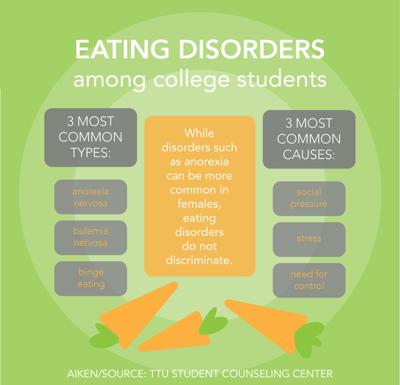
Since I like other women in our society view my body as something that can and should be manipulated, I resorted to gaining control of changing life factors through a change in my appearance.

This tendency to think of our bodies as a means of escape rather than a source of knowledge, is the result of a society structure which objectifies women bodies.

Rather than befriending my body, I viewed it as something which could and should be managed. Fast forward one year. I am weight restored and to the average eye, “recovered”, but I myself know there is work to be done internally in order to find my true self in a society that overlooks the true female self every day. While I could point fault at the system for placing these ideas of desirability in my mind, I could not ask the system to change for me. For this reason I sought methods for recovery that focused on my personal needs. The discovery of these methods marked the beginning of a self-discovery process as I learned to change what I thought to be important in life. Through recovery I worked to replace beauty ideals and obsessive tendencies with compassion and kindness towards myself.

P1: If a challenge faced by women is rooted in the experience of being alienated from one’s body—i.e., experiencing the body as an object to be managed (much more often and more intensely than is normal or healthy)—then this challenge is a manifestation of the structural oppression of women. 

P2: In many cases, eating disorders among women are rooted in the experience of being alienated from one’s body.

C: In many cases, eating disorders among women are manifestations of the structural oppression of women.


The first premise is routed in the work of Iris Marion Young, author of Throwing Like a Girl.Young describes the structural phenomenon of body objectification in her writing. Through quotes from this work, and through additional resources I will argue women face challenges due the experience of body alienation – a form of body objectification, which is manifested in our society. To begin I want to define body objectification to illustrate the depths of its meaning.


Body objectification describes the situation of a women living in her body “as a shape and flesh that presents itself as a potential object of another subjects intentions and manipulations.” (Young, 154)

9780195161922.jpgIt is not just the society that views the woman’s body as an object. Overtime the woman adopts this belief as well. Unconsciously the woman will begin to “take her body as a mere thing.” (Young, 154) These entrenched thoughts contribute to the experience of body alienation as the objectified bodily existence begins to impact the woman’s self-consciousness. Body alienation creates a separation between a woman’s physical body and her relation to the body. Therefore as long as the woman views her body as an object, or as long as society views the woman’s body as an object, the woman is unable to experience unity within herself.


Here the intrusion of structural oppression becomes evident as the woman’s life is disadvantaged by body objectification. Young defines oppression as “The disadvantage and injustice some people suffer not because of a tyrannical power coerces them, but because of the everyday practices of a well-intentioned liberal society.” The “well-intentioned liberal society” mentioned in this definition would be the patriarchal society that defines women as objects, “a mere body.” Young claims the sexist society which defines woman as objects and mere bodies as well, is also responsible.

These structure’s create environments in which the woman is gazed upon as an existing  body.

One of the many disadvantages women face as a result, is the idea that the women must be “kept in their place.” This societal message has repercussions on the woman’s behaviors as she begins to move with more restriction. If the women were to live in her body openly, she would run the risk of inviting objectification. Another example of the disadvantage the woman faces due to structural oppression, lies within the fear of bodily invasion. This fear drives the woman to demonstrate subtle acts of  protection in her daily life.Image result for brooke one tree hill projection

Another reason Young and myself believe the structure to be a form of oppression is because it ignores the situatedness of the woman’s bodily movement, forcing her to engage in types of movement (exercise) that may not bring her any inherent pleasure. This is an example of an injustice forced upon women.Oppression is also evident in the quote “Women are culturally and socially denied by subjectivity, autonomy, and creativity which are definitive of being human.” (Young, 152) As women begin to weaken their connection with their bodies they lose a sense of humanity. That sense of loss transcends out of the once “lived body” into a pressure-filled world which encourages brokenness. Although brokenness between the body and mind may appear to be the norm driving society, it creates mental dissonance which may explain the high levels of anxiety found in women with eating disorders. Individual suffering continues as long as the woman oppresses her true self.


Additionally, Young claims these structural systems of oppressions are reproduced in major economic, political or cultural institutions. To apply this claim to female bodies – cultural institutions value thinness and external beauty which is reinforced through the diet culture where our economy gains profits. Politically, women are judged based upon their appearance causing qualifications to be overlooked and disadvantages for women to arise in the workforce. These systems do not operate with malice intentions, but rather they operate as part of the everyday practices of society. Nonetheless their contributions to female body objectification and in turn body alienation are significant and should not be ignored.


Young claims an ideal relationship with your own body requires you to view your body as a subject rather than an object. Viewing the body as a subject allows us to gain knowledge from the body through trust of our own awareness. To provide you with an example of what this “ideal” relationship may consist of, I invite you to consider the concept of intuitive eating.

“Intuitive eating is about trusting your inner body wisdom to make choices around food that feel good in your body, without judgment and without influence from diet culture.” (Flores)

e037aa0d82b43c3b5af3284b220b4508.jpgFor many this description may seem impossible to achieve since it requires one to eat purely out of bodily need and pleasure, rather than out of concern for the effects of the food on one’s appearance. Due to the foreignness of this idea, many in our culture are removed from the intuitive eating skills they were once born with. As we grow up we begin to lose our intuition regarding our bodies as we are surrounded by the structural oppression of body objectification. Soon the body is seen less as a source of wisdom and more as a burden. Women are taught to engage in body altering activities such as structured exercise, dieting, etc.


In order to reject our structural norms of objectification, women must act in radical ways to reclaim their bodies. I say radical not to place a negative connotation on the women’s actions, but to demonstrate effort is required to ignite body and mind unity since it defies the structural norm. A woman must establish a means of living in contradiction to her society in order to reduce the internal versus external tension within herself. The need for an established form of contradiction is proof of the woman’s oppression.


Premise #2 states: “In many cases, eating disorders among women are rooted in the experience of being alienated from one’s body.” I want to begin the transition into this premise by clearly defining the meaning of an eating disorder as I believe there are many misconceptions of the term in our society.


Unlike the stigmas and images placed on eating disorders, an individual does not need to appear emaciated or even thin for that matter, to be diagnosed with an eating disorder. Many times an eating disorder is not apparent from the outside, while the internal struggle is overwhelming to the individual.Image result for different shape bodies of eating disorders

That being said, the National Eating Disorder Association (NEDA),  defines an eating disorder as “any range of psychological disorders characterized by abnormal or disturbed eating habits.” This definition may be useful to keep in mind while discussing the issue. Notice the definition does not include any reference to weight or appearance. This is important to recognize in order to begin to break eating disorder stigmas. I will not talk about the distinction between eating disorders and disordered eating, however both have been proven to be in part an outcome of body objectification.


Since body objectification is a cause of body alienation, and body alienation is rooted in eating disorders, body objectification is rooted in eating disorders. Body objectification transitions into an eating disorder once objectification is internalized to the point of disorder. I have provided a graph below to illustrate such a process, but essentially it begins with the self-objectification I described above.

10.1177_0361684311420250-fig1.gif

This objectification leads to excess self-surveillance as the woman may begin to notice herself as less of an individual and more in terms of others through comparison. Naturally self-surveillance of this type leads to an increase in self-critical thoughts which increases a woman’s tendency to body shame. Now keep in mind as this process continues the woman becomes more and more alienated from her body because her sense of awareness is lacking. Awareness comes in many forms but in this study interceptive is the focus. A lack of interceptive awareness creates “difficulties in identifying and responding to emotional and visceral states including hunger.” Think back to the concept of intuitive eating mentioned previously. As one’s interceptive awareness lessens, their sense of embodiment does as well. The more embodies awareness is lost, the more people obsessively focus on their surface body as something to change or control.

Identifying with the surface body leads to dangerous eating disorder habits such as stepping on a scale, checking yourself in a mirror, or counting calories.

Here one can begin to see signs of the formation of an eating disorder. The growing attachment to the external body leads to “abnormal or disturbed eating habits”, which we see in the definition of an eating disorder stated above. Dr. Ann Saffi Biasetti, a psychotherapist who has specialized in the field of eating disorders for 25 years recently wrote a book titled “Befriending Your Body.”Image result for befriending your body book
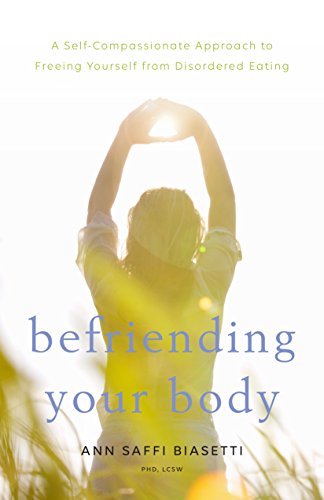
In this book she describes body alienation a sensation of “feeling broken.” This feeling includes a “sense of shame, feeling not okay as you are and with who you are. It also encompasses pain from the past, pain that is perhaps too much to bear”(Biasetti, 22) She carries on to say “This pain often lands in your body and becomes overwhelming. Eating disorder behaviors, such a bingeing, purging, and restricting, are often a response to this pain.” This quote demonstrates the power between the body and mind. Thoughts and feelings of body alienation, prove themselves to be strong enough to produce eating disorder behaviors. Women may begin to restrict their food intake believing their body is not deserving of proper nutrient, while potentially engaging in excess exercise. As these habits develop “women’s existences are weighed down by tying her to nature, immanence, and the requirements of the species at her own individuality”(Young, 143)Women no longer are acting for the benefit of themselves; they are acting in response to the pain of being alienated from their bodies.


Knowing that body objectification which leads to body alienation is the result of structural oppression and eating disorders are rooted in body alienation, it is logical to conclude eating disorders are manifested in structural oppression. It would also be logical to assume since the root is structural, the solution would be structural as well. However, this argument is false.


Despite the similar roots and the bodily responses amongst cases of eating disorders, it is an individualized process which implies the recovery process must be aimed at identity formation. Dr. Biasetti writes:  “You must cultivate and build your body, your-self, and your spirit for the behavior to end, at least for it to end permanently. A self-compassionate recovery looks to embrace and heal at all levels – body, self, and spirit. It includes emotions, embodied moments and shifts, reframing thought, and movement forward in life and relationships.” (Biasetti, 107) This quote demonstrates a universal solution to eating disorders such as a change in the structure of our society would not be a sufficient means of recovery, for it would neglect crucial aspects of healing that Dr. Biasetti claims need to occur.


In addition to compassion, identity formation during recovery from an eating disorder requires one to distance themselves from identifying as the eating disorder. Often times it is frightening for people to picture their lives without the eating disorder. This is because of the disorder is a form of coping as I mentioned previously. The disorder attempts to cope with feelings stemming from: the fear of rejection, a person’s low self-esteem, the overwhelming  of life, etc. The disorder is not an effective coping mechanism however, as it leads to further judging and rejecting of oneself. The key in transforming one’s identity in the midst of this disorder is recognizing the coping mechanism as a type of illusion. The illusion is filled with lies that separate your true identity from the one you are currently holding.


This recognition can be life altering. As Frankfurt claims it takes something of trauma to change your perspective about your cares, because the change is a radical one.

3496._UY630_SR1200,630_.jpgIn the context of an eating disorder, women must cultivate the skills and courage to shift their cares from control and desirability,  to self-compassion and acceptance. Although it defies our society, women must alter the importance they place on external validation, by recognizing the existence of body objectifications in our culture. Of course this process is a frightful one for many. It takes time, effort, willingness, and a tremendous amount of bravery to face the pain that has been trying to surface through the disorder. So how is this done? Dr. Biasetti suggests people begin reflecting on questions such as “Who you are?” “What are your values?” “What does a meaningful life look like to you?”(Biasetti, p.74) In addition to these questions, people are encouraged to envision their dreams and ask themselves if they see their eating disorder during this stage of their lives?


Such a personal approach to recovery is not to suggest we as a society shall remain passive to the structural oppression occurring because messages of body objectification are constantly being unconsciously received by women. The societal solution begins by gaining knowledge of unknown. If we as a society we can begin to gain awareness of the messages being produced which reinforce body objectification, we can label them for what they are. In addition to this, if society begins to recognize recovery as an individual process, we can begin to increase the quality of care we show for people suffering.


My hope is that by reading about the complexities and roots of eating disorders, can begin to dilute stigmas and shift the focus away from the female body as an object towards the body as a messenger of wisdom. Every person in our society deserves to live an embodied life in which they experience unity between their body and mind. No attitude, opinion, or fear should prevent a woman from feeling free in her body.


images-1.jpegimages.jpeg


Work Cited:


Biasetti, A. S. (2018). Befriending your body: A self-compassionate approach to freeing yourself from disordered eating. Boulder: Shambhala.


Frankfurt, H. (1982). The importance of what we care about. Synthese,53(2), 257-272. doi:10.1007/bf00484902


Marshall, S. J. (2019, April 11). The Mental Versus Physical Sides of Eating Disorder Recovery. Retrieved from: https://themighty.com/2017/01/mental-versus-physical-eating-disorder-recovery/


Tiggemann, M., & Williams, E. (2012). The Role of Self-Objectification in Disordered Eating, Depressed Mood, and Sexual Functioning Among Women: A Comprehensive Test of Objectification Theory. Psychology of Women Quarterly,36(1), 66–75.


Young, I. M. (1990). Throwing like a girl. Indiana University Press.


Young, I. M (1988). Five Faces of Oppression.Philosophical Forum 19 (4):270


Recentering (A Self Check-In)

Recognizing it has been a long time since writing last, it seems like an appropriate time to check-in with myself. This past summer and fall were heavily devoted to self-care and establishing what type of balance allows me to feel most comfortable and confident within myself. And so I devoted an extensive amount of time to activities I found to be really productive. These activities included yoga, journaling, meditations, etc.  I was practicing at least one of these daily, and seeing and feeling the benefits establish themselves within me. Fast forward spring semester, I return to Wake. I had hesitations and nerves coming back to school knowing the work load is heavily demanding and wouldn’t allow for nearly as much free time to devote to self-care. That being said, I comforted this thought by reminding myself I have established a healthy base and toolkit that will carry me through the semester. Today, April 3rd I write to ease the feelings of overwhelmingness that have quietly accumulated over the course of the semester. The past few months have been incredibly busy. I am trying to juggle my course load, clubs, friendships, distance relationships, and health. These commitments have led me to feel trapped in never-ending responsibilities. Unsurprisingly, I have experienced degrees of anxiety, constantly fearing failure. Although I know the solution to this feeling to be ways of self-care I listed above, I have not been diligent about completing any of them. Today I caught myself loathing my body and my lack of mindfulness towards food. In a way I feel I have replaced restriction with excessive freedom around food, allowing for it once again to be an unhealthy source of coping. This does not imply restriction lies in my future. This implies it is time to reimplement moderation and find time for myself again. I know my unhappiness with my body is not about the body itself, but rather my pent up feelings of anxiety and pressure to please. Today I recommit myself to finding this time for myself, in order to be more present with others and to enjoy my days more. By picking up meditative practices again, I aim to find the importance and beauty of the moment again, without allowing my thoughts to stray into the unknown and fear that is the future. I want to be a more attentive friend, in the same way my friends are one to me. I aim to feel engaged in conversations, fully, unconcerned with judgments or distractions. Despite the time consuming nature of finals, I will journal and meditate, knowing this may be the most productive use of my time no matter the circumstance. Self-care is not selfish, in fact it may be the most selfless opportunity available to individuals, as it allows one to commit themselves to be a better person for others and to contribute more to their surroundings. My best friend Sofia provided me with such great insight today, and I feel overwhelmed by gratitude for her wisdom and knowledge of my true self. She said my most noteworthy/ unique passions and interests haven’t been visible or active lately. This comment really allowed me to put my current self into perspective. If I am out of touch with the things I enjoy doing the most, then who am I currently? I am confident I can get back to the place I was in coming into the semester, because as my mom said “The hardest part is over.” I have found the practices that are healthy for me and I have a stronger mind because of it.

Thoughts of Today

Second semester of junior year has begun. This is my first time being back on campus since May and while I anticipated the transition to be one that would take some adjusting, I feel as if the adjustment period is already over. Yet, something feels different this semester than all my past ones on campus. I have developed a relationship with my mind and body that I am proud of and by being back in an environment that has tested me in the past, I am testing the strength of that trust.

Today I had an appointment with a new nutritionist who I will be working with this semester to stay on track. She asked me a series of question to get to know me and my current state of health. I began by giving her a brief recap of freshman year, progressing into my progress over the summer of 2017, to last school year, to abroad, to now. She stopped me a few times along the way to ask me some questions, all of which I answered with confidence. And then she said something beautiful that I have believed to be true for a while, but haven’t necessarily heard vocalized. She said, “It sounds like you’ve put a lot of hard work into your recovery and your well-being, and it sounds like you are being rewarded because of it.” I have believed this to be the truth for several months now, but to hear it in this moment from a professional, I felt a sense of pride but also clarity. Yes, I am being rewarded for it. I am rewarded everyday when I choose to treat myself well. My mental well-being has not only allowed me to experience happiness and gratitude in little moments I encounter daily, it has allowed me to be a better person to others. I have accepted to a degree that I cannot solve issues people are trying to sort through. I cannot be perfect for other people while still treating myself well, but I can be aware. I can be attentive to others needs and concerns. And I can use that gift of awareness to transform into wisdom. I like the think this assurance I have developed in each moment is the factor that allows me to find beauty in people and places every single day. It is interesting; I find the more I see the world and the more I learn, the greater my desire becomes to be able to appreciate the daily simplicity surrounding me no matter where I may be. There is something so special about being able to see the moment your in for what it is, nothing more and nothing less. I work to gain this awareness not just for myself, but for all others who deserve to see the world through a similar lens.

Mindfulness transforms lives. It may seem abstract, it may be a concept that has never resonated with you, but I believe it to be a practice that makes everyday one I enjoy living. I continuously work towards creating headspace between my judgments of a situation and the situation itself. My journey is no longer about my body or even my physical health for that matter, that all seems to come naturally now out of respect for myself. Now I am focused on creating a safe environment for people like myself to explore and discover through a cultivation of awareness.


Life Was Never Said to be Easy, So Find Your Balance

Often I find myself experiencing a bit of guilt for living such a privileged life, yet not feeling completely content day to day. This feeling has felt most intrusive while traveling to places people often dream of visiting. Today we constantly hear about the quest to seek eternal happiness, but can we ever achieve it? In fact, do we know anyone who has?

I believe one of the biggest life thief’s is the one which removes you from the moment you are in by either pressuring you to feel a way which proves you are grateful, or by leading you to wish you were elsewhere. Neither option allows you to be mindful of the moment you have been placed within. This can severely detract from experiencing the joy present within your days. In order to shift from this desire to feel more or to experience more, start by balancing what is in front of you. By hushing some of these pressures we internalize to a point of self-guilt, we find contentment.

Recently I have been struggling to find a sense of ease with another major transition ahead. I can feel the anxiousness as I embark upon my transition home and back to school, arising. I so badly want to silence the feeling before it surfaces. In response to my emotions, I repetitively think to myself “Don’t think this way.” “Live in the moment.” “Be grateful for what is in front of you.” Despite my forceful efforts to suppress the arising feelings, these reminders to live in the moment only lead me further away. These self-messages are not compassionate, but rather add a layer of pressure.

One of the most rewarding parts of self-discovery is your growing ability to be in-tune with such pressures. This allows for more frequent moments of realization. Recognizing the building pressure, I vocalized them to my mom. As the phone was ringing I wasn’t entirely sure what I wanted to say, but I knew food restriction was no longer my coping mechanism, so instead I would seek support through connection. Connection is such a fundamental need to us as humans. The mind can become an isolating place no matter how badly we don’t want it to be. Even when I am acting in self-compassionate ways, I cannot be without connection.

We do have the power to control our emotions and act compassionately both inward and outward, but in order to do so you must find your balance. I was forcing relief upon myself in ways that was only adding stress. Until I looked outside of my thoughts and heard from someone who knows me best, I was struggling to reach a peace of mind.

Through continuous learning and exposure to my weaknesses I am defining what balance looks like to me. As of now I know my balance lies somewhere between moments of solitude and connection. Solitude consists of times when I can practice headspace, write in my journal, connect with my body through yoga, stimulate myself intellectually, exert myself physically and read words that inspire me. And times of connection, which consist of times I open up my ears and heart to genuine listen to those in front of me, to digest and learn, to practice empathy, to express suffering, to share moments of laughter, to awaken people to the beauty I see in them, to allow them to do the same to me.

When we live intentionally within the body and soul God has gifted us, we live with internal pride. There is no reason to force a feeling simply because you were told it was suppose to exist or because you long for it to, when we do this we move further away from the present moment that is only here right now.


See photos below of how I illustrate the contentment I find in balance: